The Lehigh Valley Economic Review
Analysis of inflation, housing sales and volume, deed and permit registrations, the local and national labor market, and our quarterly survey of Lehigh Valley businesses. 27 issues, free to read.
Browse issues
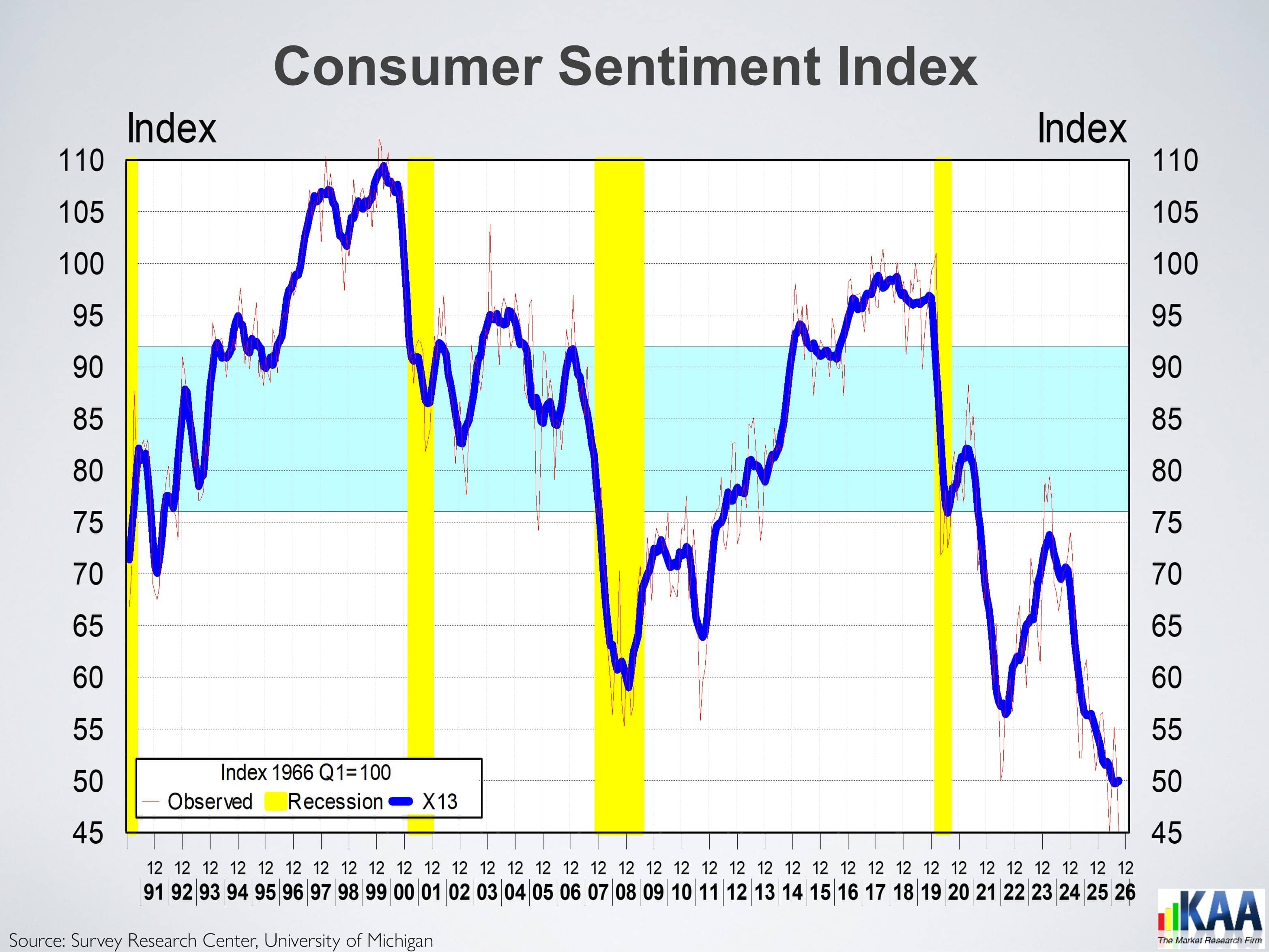
Consumer Sentiment down 13%
The September Consumer Sentiment index, at 48.1, is the second-lowest level since its inception; its lowest level, at 44.8, occurred in May of this year. The four lowest consumer sentiment levels have all occurred so far this year. 2026 is the first time the index has fallen below 50. The September index was 7 points below its lowest level during the Great Recession.
Read the issue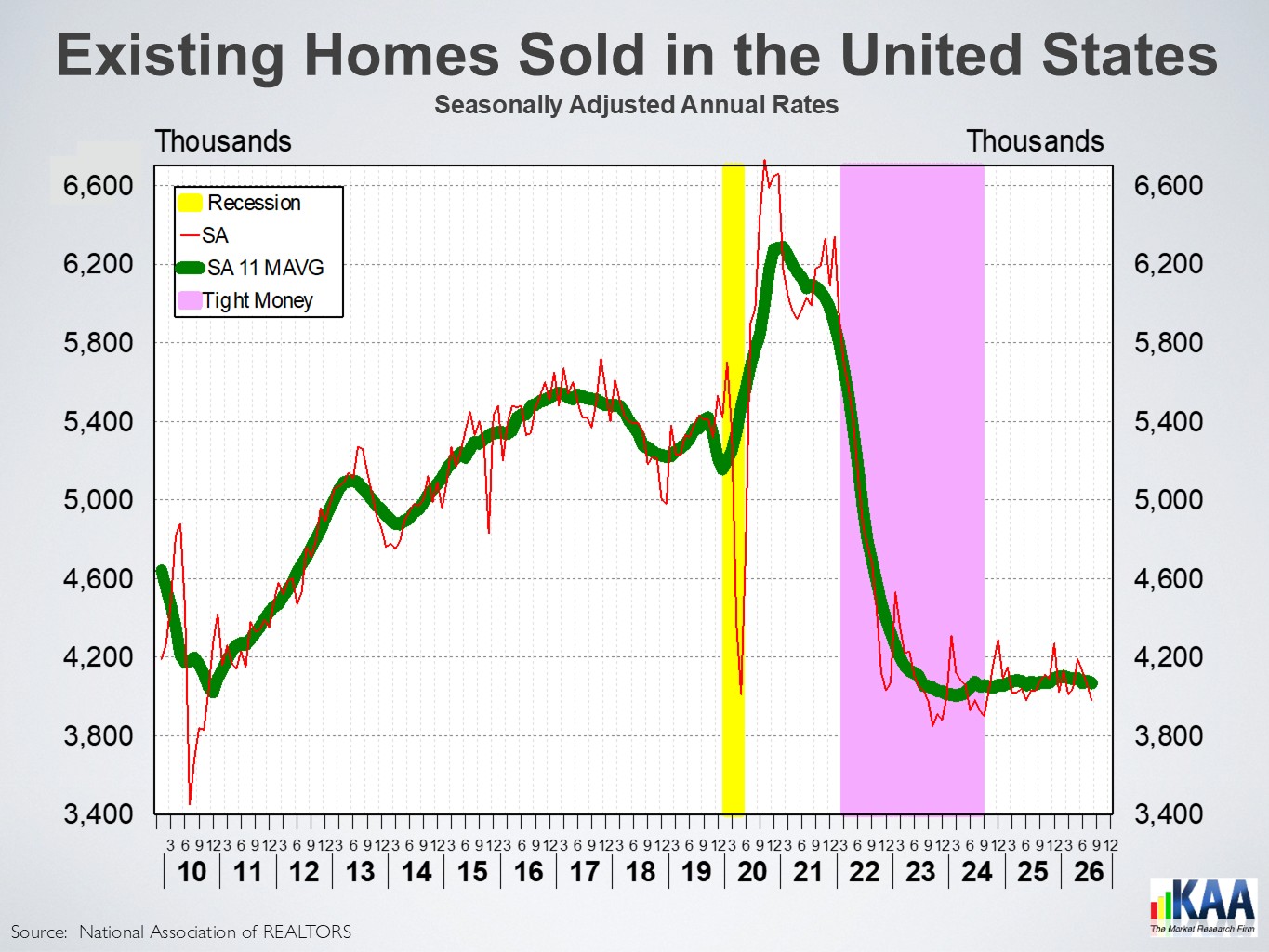
Housing Sales Flatten
U.S. home sales in August were slightly below their level a year earlier as mortgage rates moved higher. Most forecasts expect borrowing costs to remain measurably above year-ago levels through the rest of the year.
Read the issue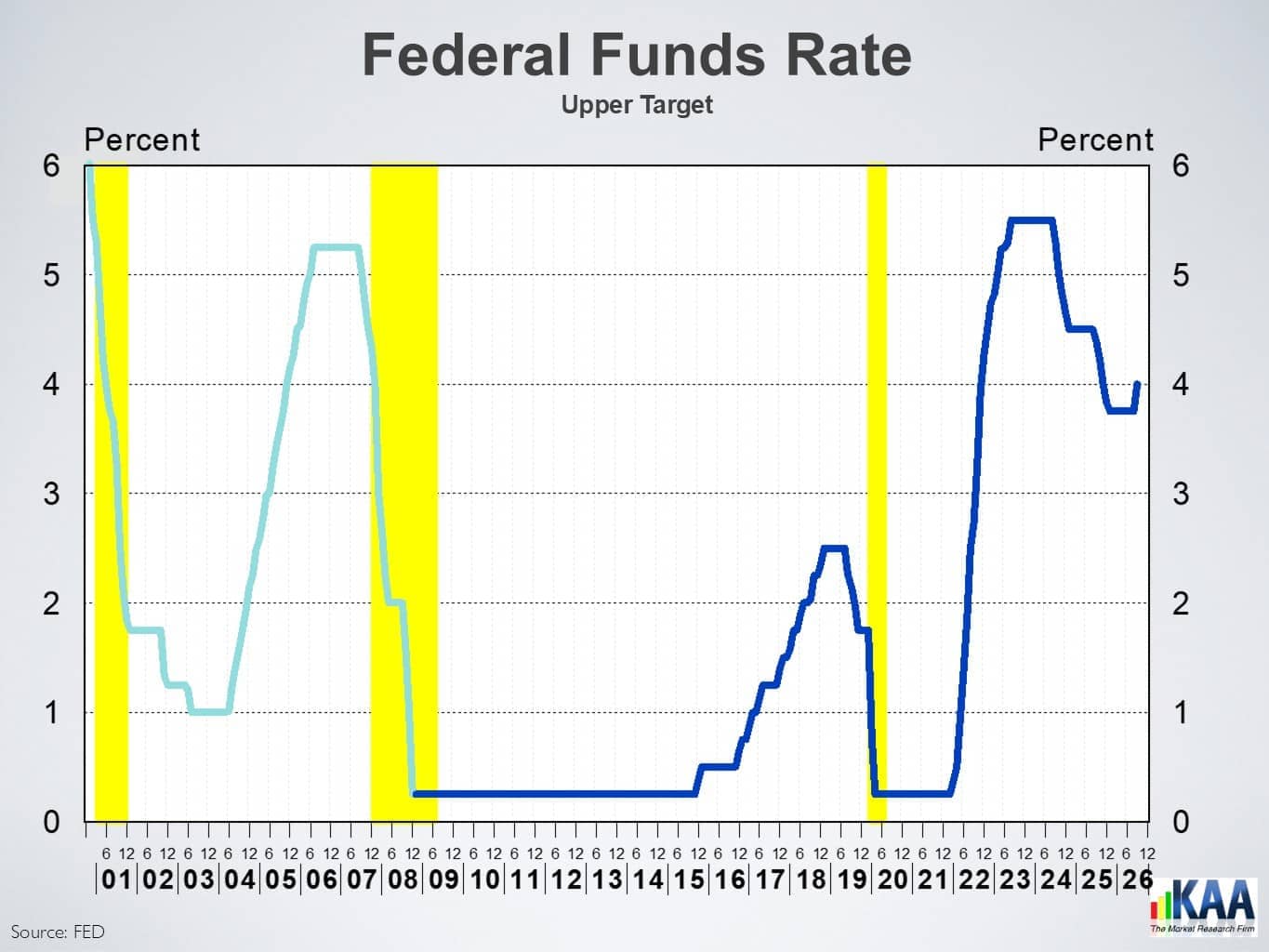
The FED raised its rate
During the September meeting of the Fed's Open Market Committee (FOMC), the members decided to raise their rate by a quarter of a percent, the first raise in 3 years and the first change since last December’s quarter-point cut.
Read the issue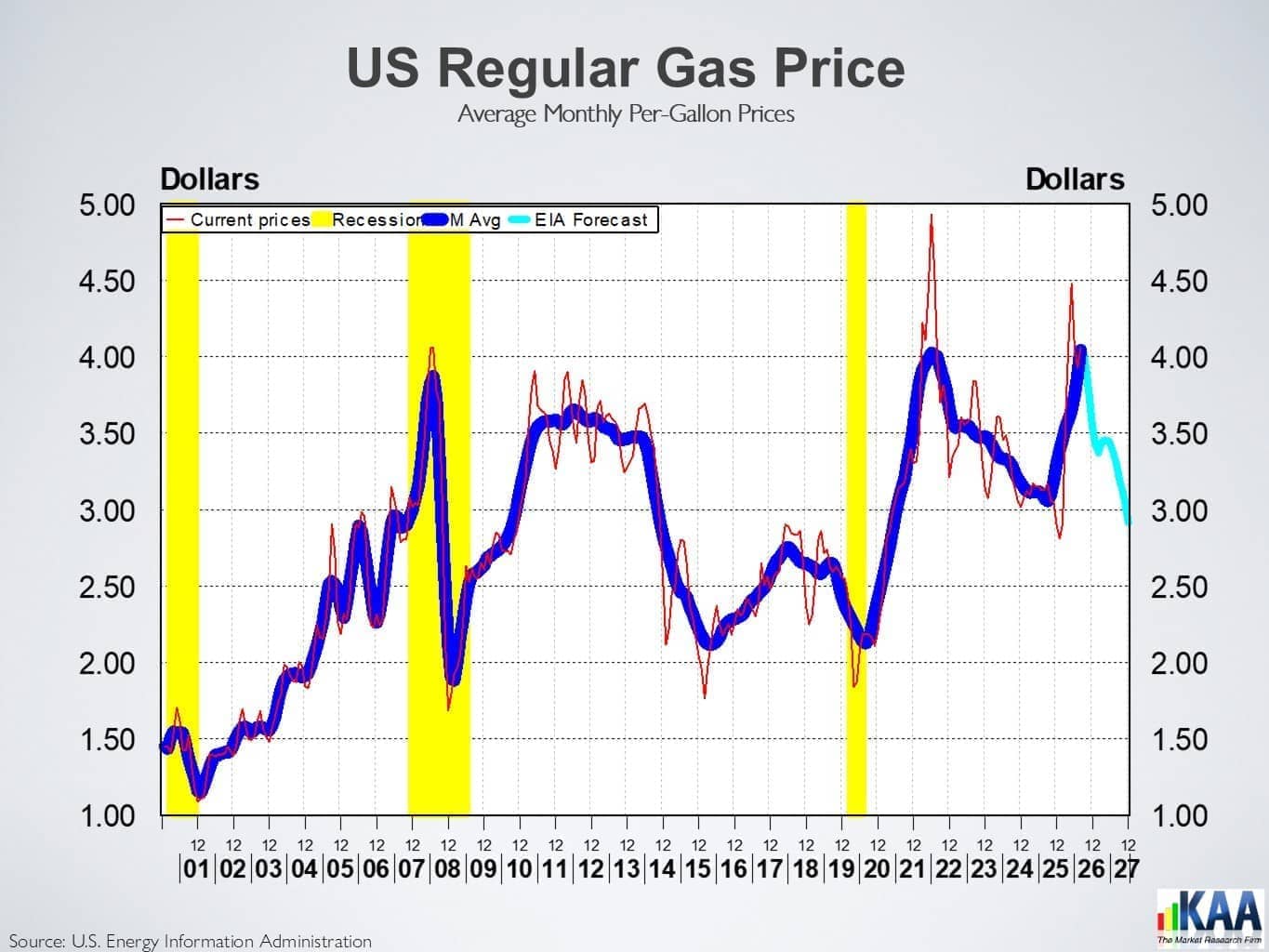
Gasoline prices are rising.
Gasoline prices are heading back up. According to AAA, regular gas in the Valley currently averages $4.21 per gallon, slightly higher than the national average of $4.15. It’s been a volatile year at the pump. We started January at $2.81, followed by consecutive monthly increases that peaked at $4.48 in May during the initial outbreak of war in the Middle East. Prices briefly dialed back through June and July as hostilities eased, but as regional conflict has flared back up, so have prices at the pump—breaking $4 in August and maintaining that upward momentum.
Read the issue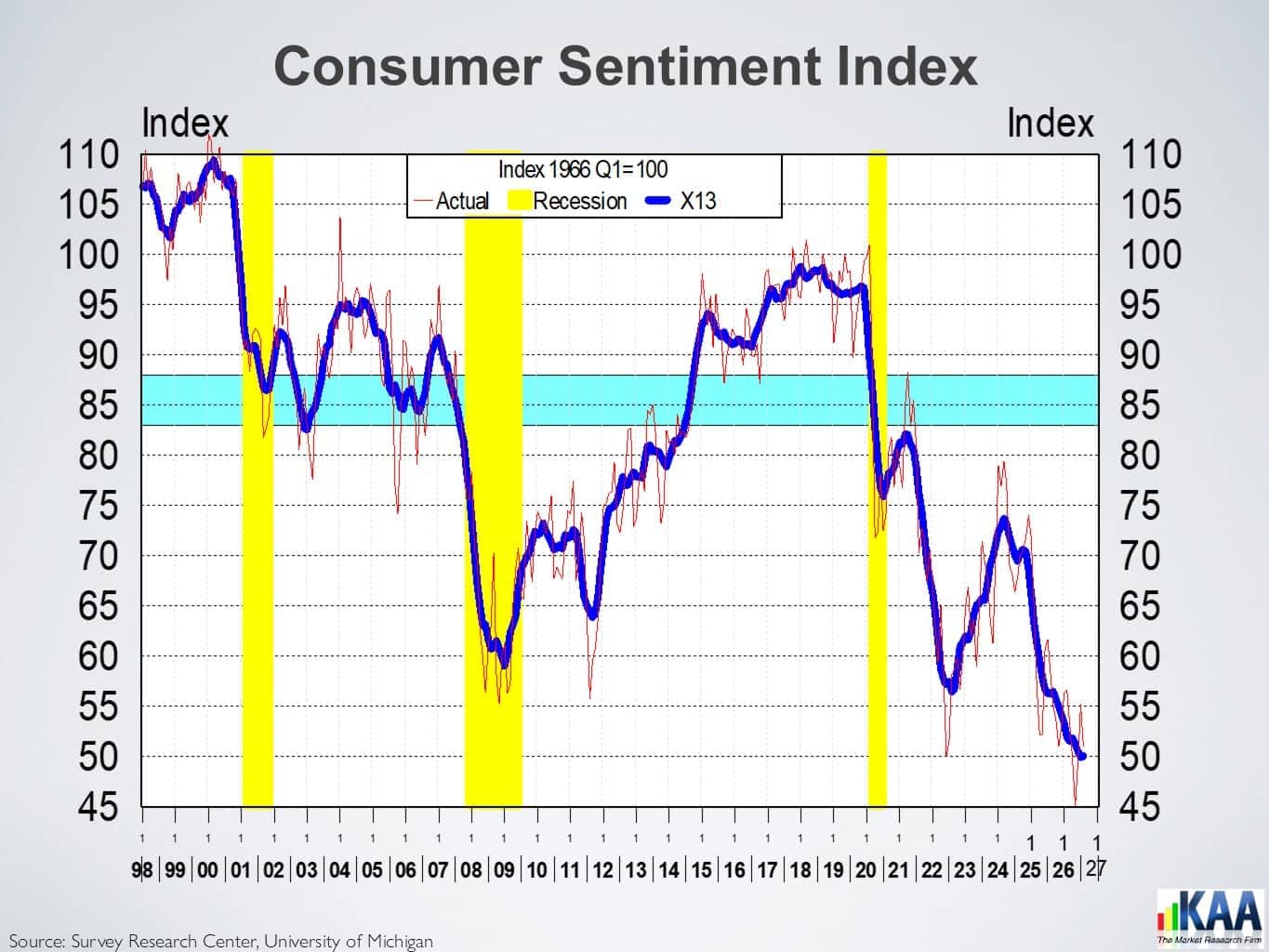
Consumer Sentiment down 11%
The August Consumer Sentiment data showed an 11% drop from last year. Slight improvement over May’s index, which was at its lowest level since the index’s inception in 1952, according to the University of Michigan.The decline in confidence was widespread, but more pronounced among older consumers, lower-income consumers, and those without college degrees.
Read the issue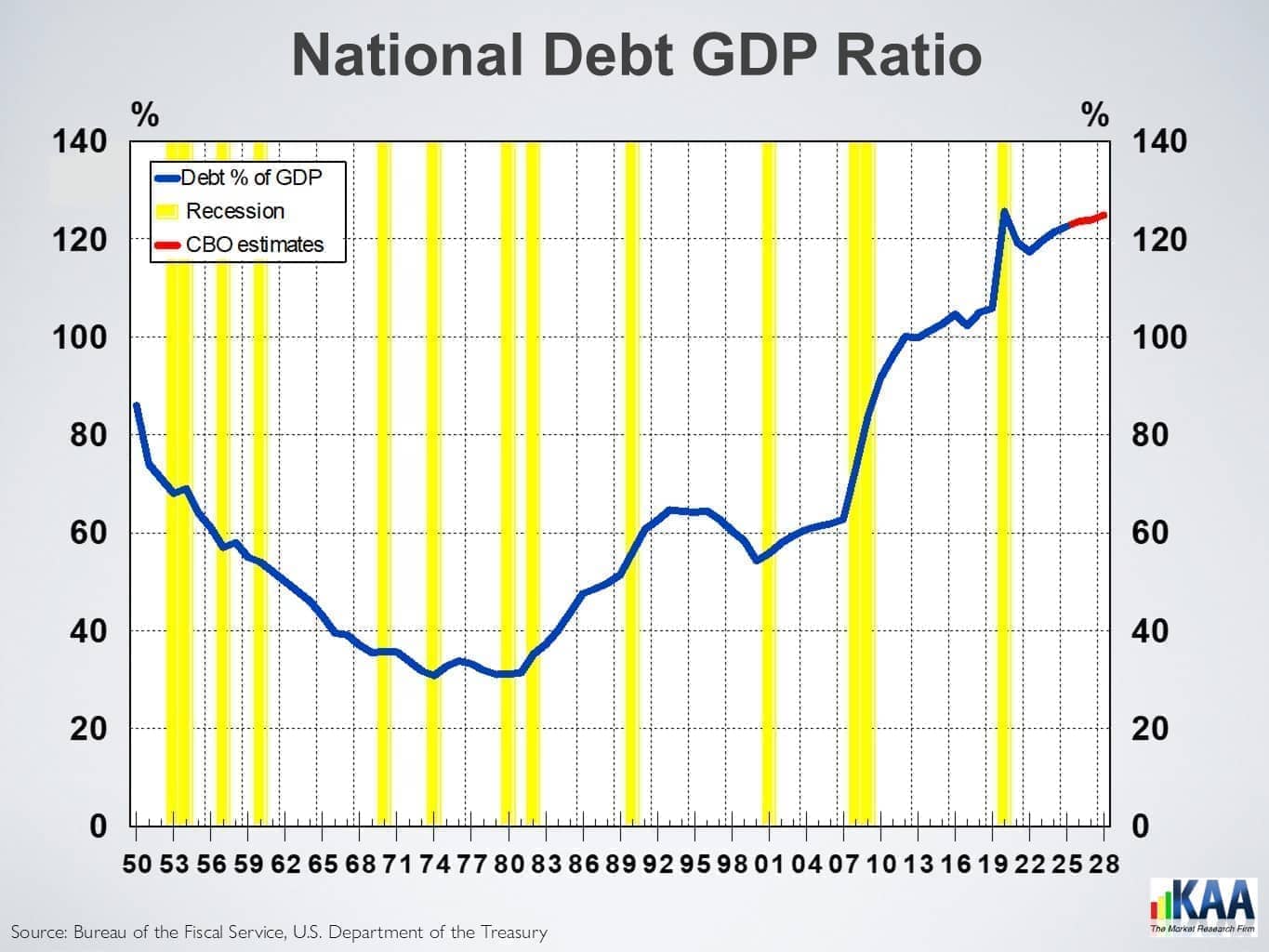
Our national debt topped 40 trillion dollars
The national debt just topped $40 trillion and will continue to rise. At this level, it is 123% of the country's Gross Domestic Product. Yes, the national debt is larger than the GDP, and it has consistently been higher since 2015. It should be noted that the national debt has exceeded GDP during serious emergencies in the past; for example, the debt-to-GDP ratio rose to 121% by the end of WWII. More recently, in the 2nd quarter of 2020, amid the COVID crisis, the national debt rose to 135% of GDP, higher than it was after WWII.
Read the issue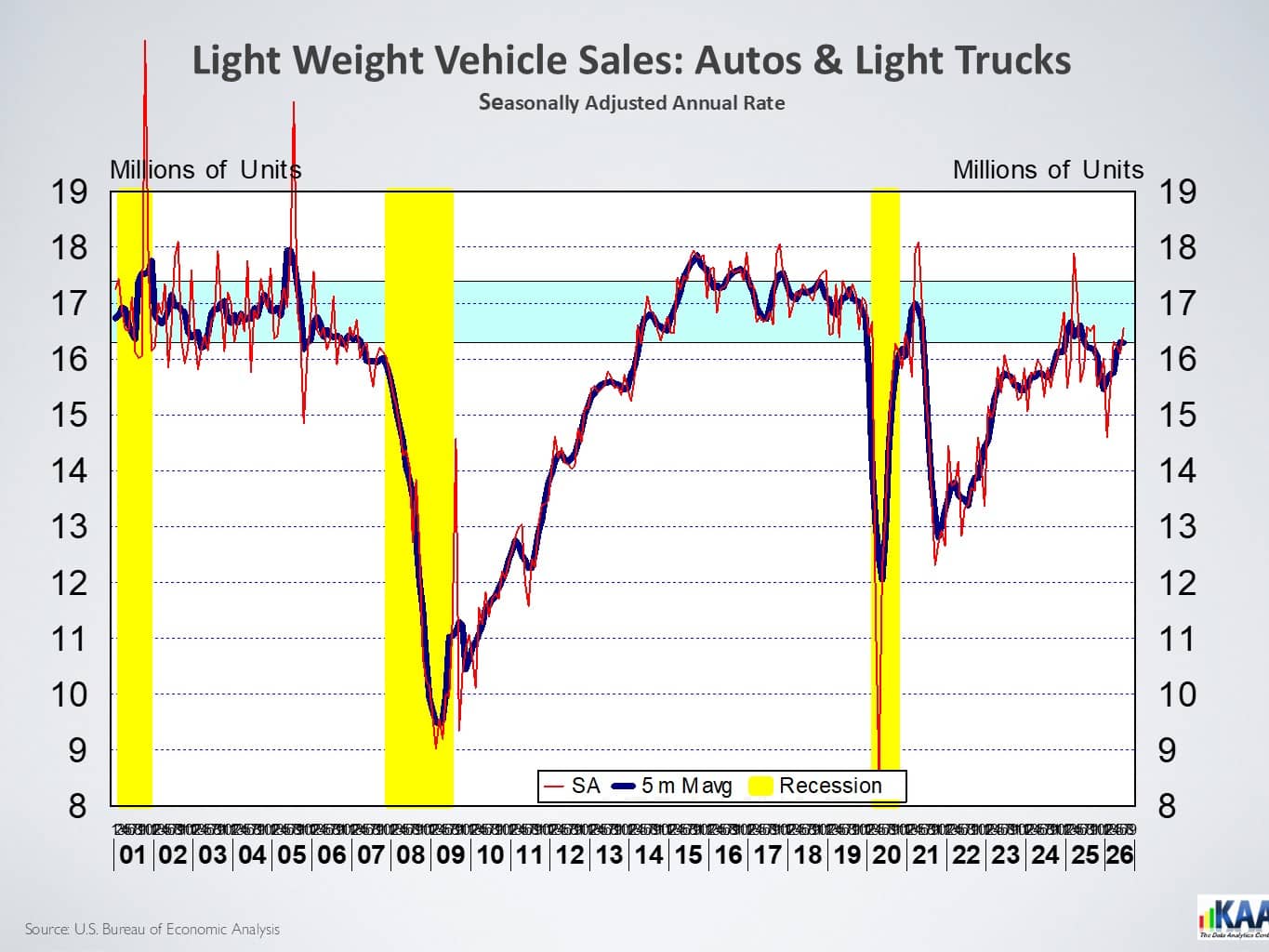
Car Sales up 4.6%
Car sales rose to 16.6 million at seasonally adjusted annual rates in June, up 4.6% from the previous year's level. Car sales peaked in March 2025 at almost 18 million, just before the new tariffs were announced, and have trended downward through the end of last year.
Read the issue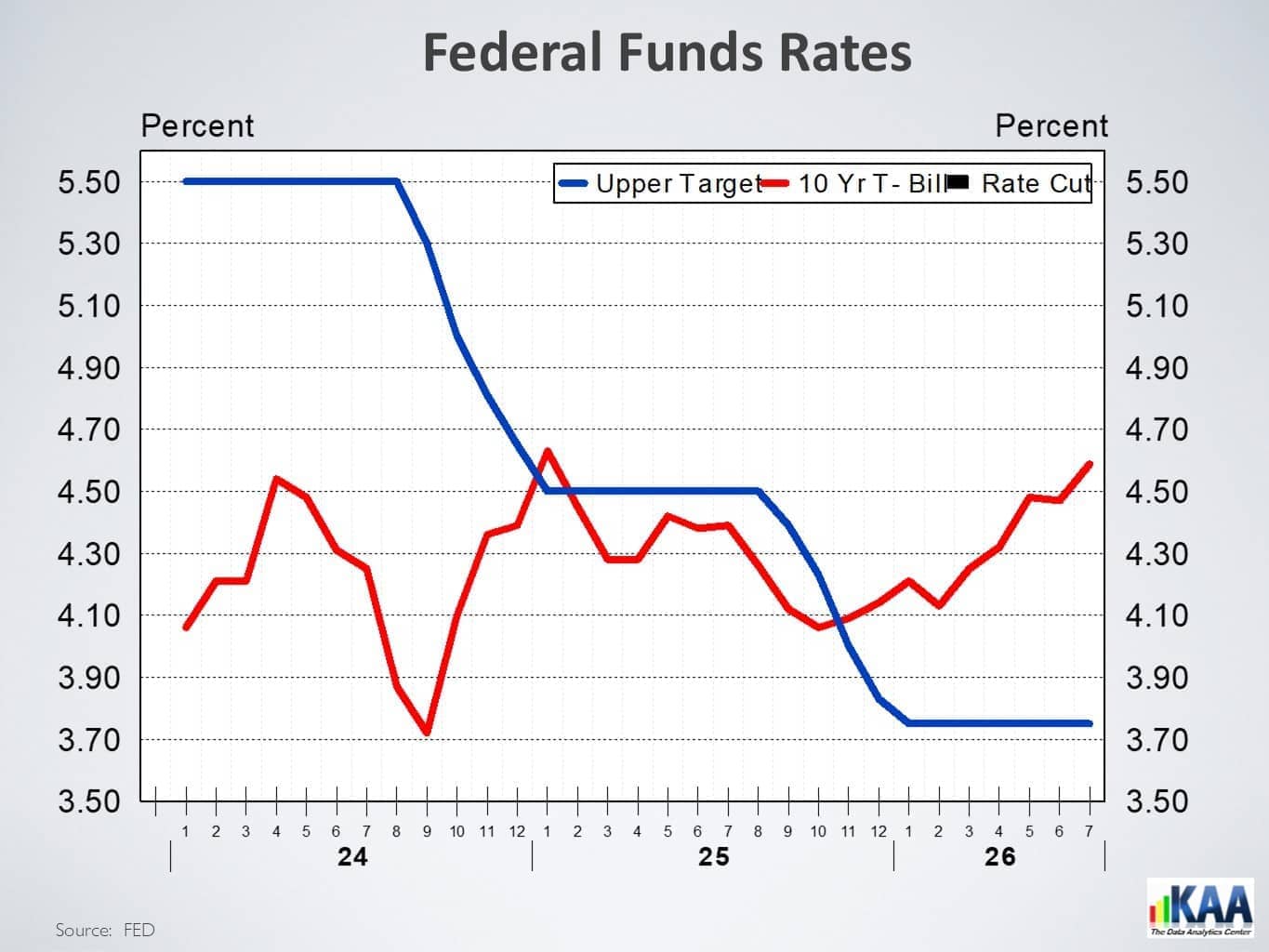
The FED held its rate steady
The Fed, under a new chairman in his second Federal Open Market Committee (FOMC meeting in July, held its rates constant, the same as in the four previous meetings in 2026. The last time the Fed changed its rates was a 25-basis-point cut last December.The Fed cited economic and employment growth and considered inflation, which is higher than its 2% goal as a result of a supply shock, implying that it is temporary, as the committee WILL deliver price stability.
Read the issue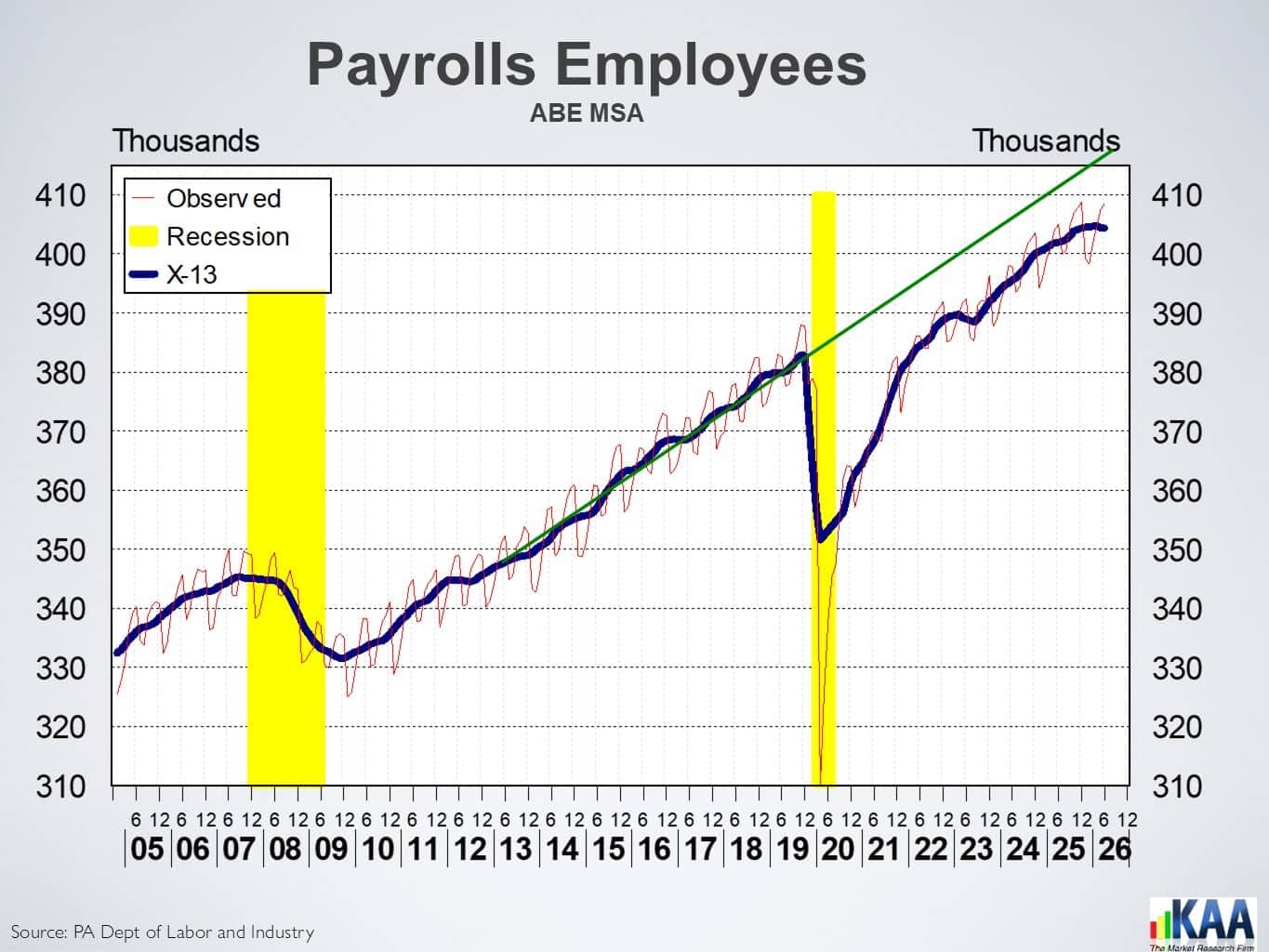
The Lehigh Valley Labor Market
According to the PA Department of Labor and Industry, Lehigh Valley's seasonally adjusted payroll employment rose to 406,000 in June, an increase of 3,000 jobs in a year; however, its long-term trend, somewhat similar to the national data, has been flat since last September.
Read the issue Consumer Sentiment 19% down from last year
The June Consumer Sentiment data showed a 5 point increase from its lowest level ever, 44.8, in May, mostly due to a drop in gasoline prices, particularly among lower-income households, where “gasoline comprises a larger share of their budgets,” according to the University of Michigan. However, even with the June increase, it is 19% below its last year’s level and still below its lowest level during the Great Recession!
Read the issue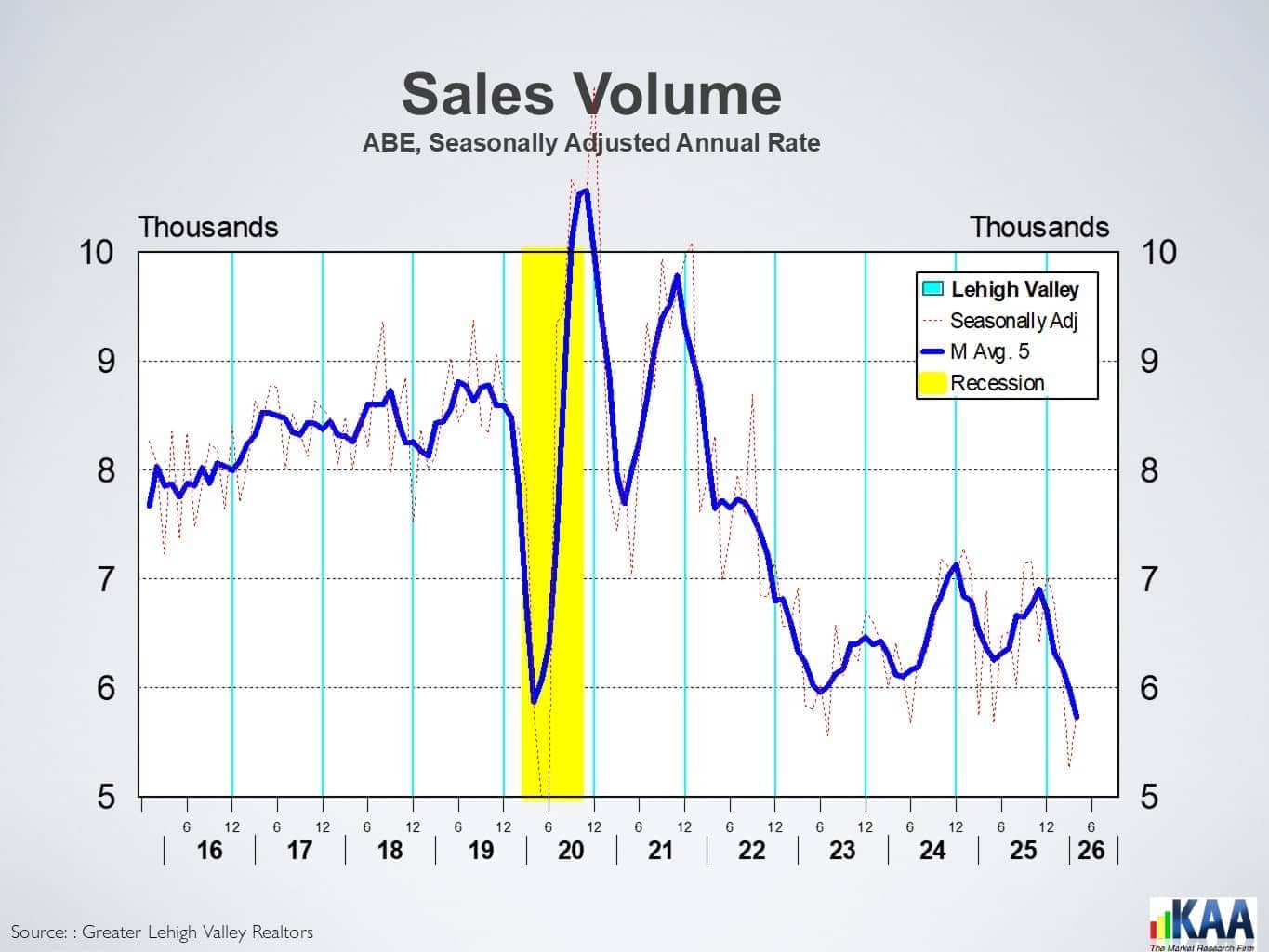
The housing market is hitting the brakes!
In the US, demand for housing is at its lowest level since the Great Recession, declining by 1.3 million units per year below its pre-COVID average for this century. The median price of existing homes sold has also dropped since the middle of last year, although their inflation-adjusted prices have been dropping since 2021.
Read the issue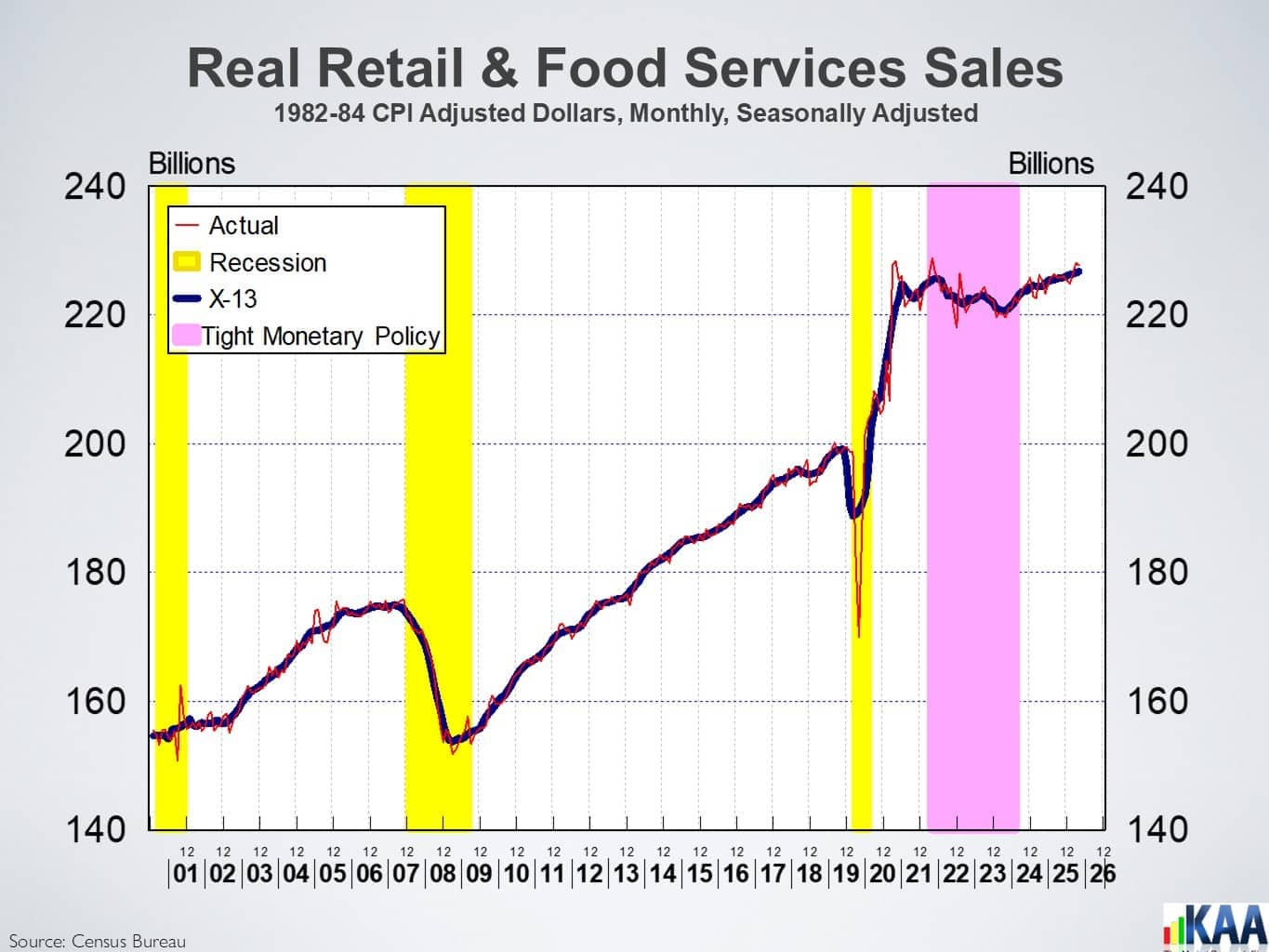
The Retail Resiliency: Is This an Illusion?
The latest Census Bureau data paints a picture of a resilient economy: retail sales climbed 0.5% in April, marking three straight months of expansion and lifting total spending to $757 billion. Year-over-year, that is a robust 4.9% jump. However, peel back the layers, and a much more complicated reality emerges.
Read the issue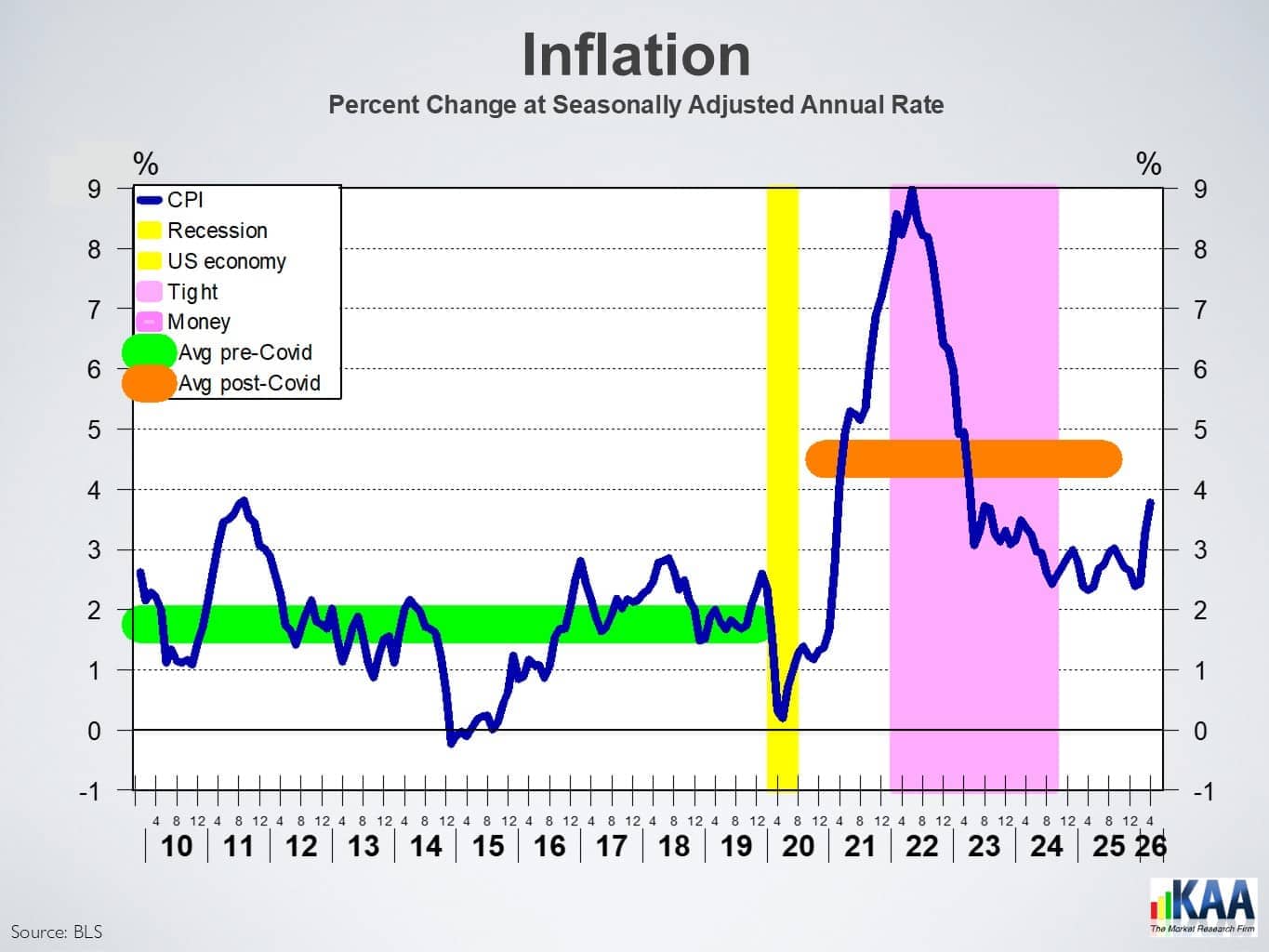
Inflation rose to 3.8% in April.
According to the Bureau of Labor Statistics, the seasonally adjusted Consumer Price Index (CPI) increased by 0.6% in April. This rise has led to an overall inflation rate of 3.8% over the past 12 months, a significant increase over the already elevated 3.3% reported for March. If your household budget feels increasingly strained, the data provides a clear reason: a massive surge in energy costs accounted for over 40% of the total monthly increase in the CPI.
Read the issue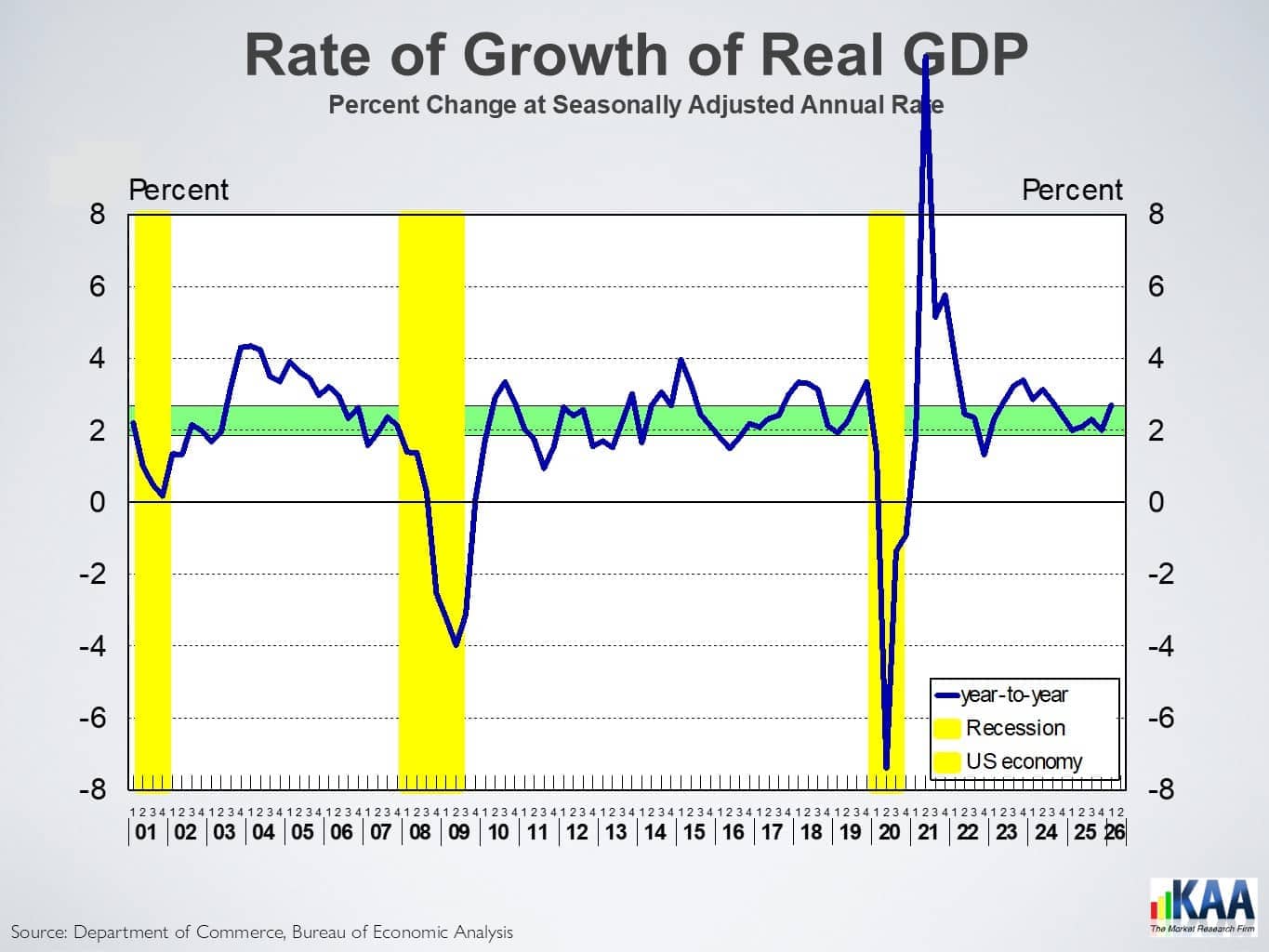
The economy grew 2%
The U.S. economy grew at a rate of 2% in the first quarter of 2026. Nominal GDP growth reached 5.6%, but once adjusted for inflation, real economic growth was estimated at an annual rate of 2%. This brings the total economic growth over the last four quarters to 2.7%. This measure indicates that the economy continues to move forward, though the underlying momentum is beginning to shift.
Read the issue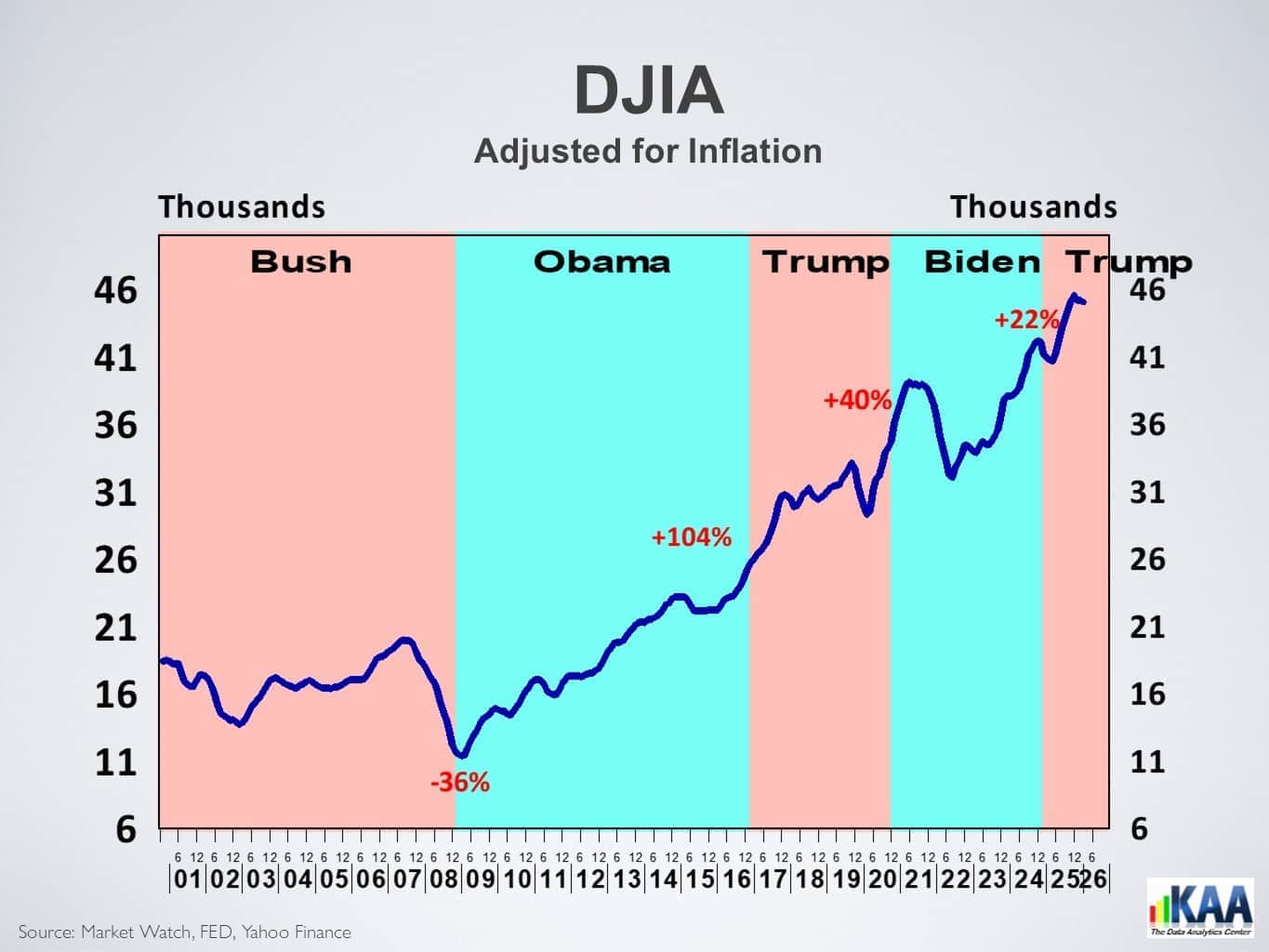
The Quiet Constant: Why Market Momentum Ignores the Noise
We often assume politics drives the market’s daily performance. But since 1950, over 75 years of growth, the data suggest the market plays its own song—driven more by global energy, technological innovation, and corporate earnings than by the daily news cycle
Read the issue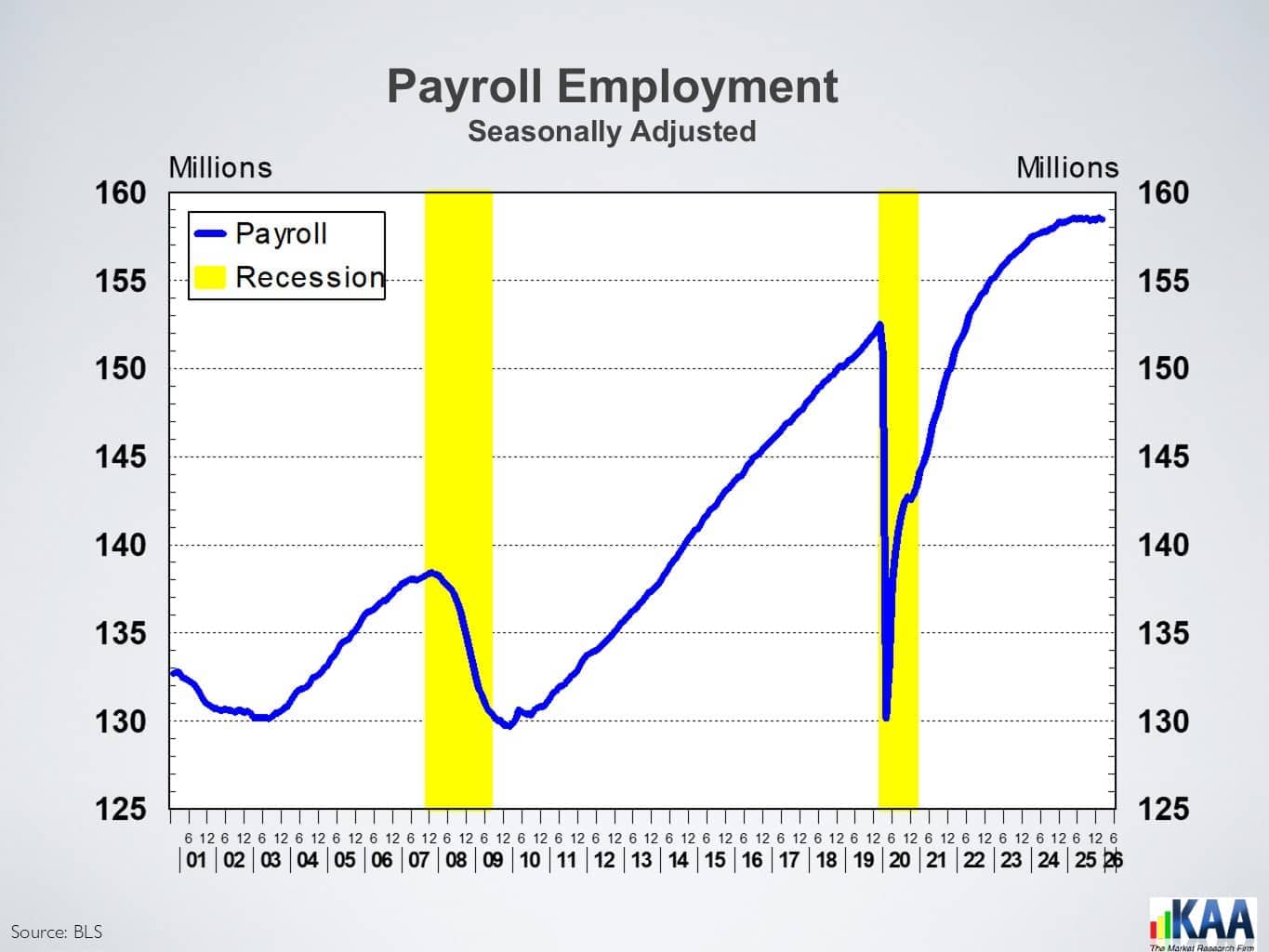
Employment unexpectedly declined in February
According to the Bureau of Labor Statistics (BLS), payroll employment dropped by 92,000 in February, well below the expected 50,000 increase. The unemployment rate inched up to 4.4%, little change from January’s 4.3%.
Read the issue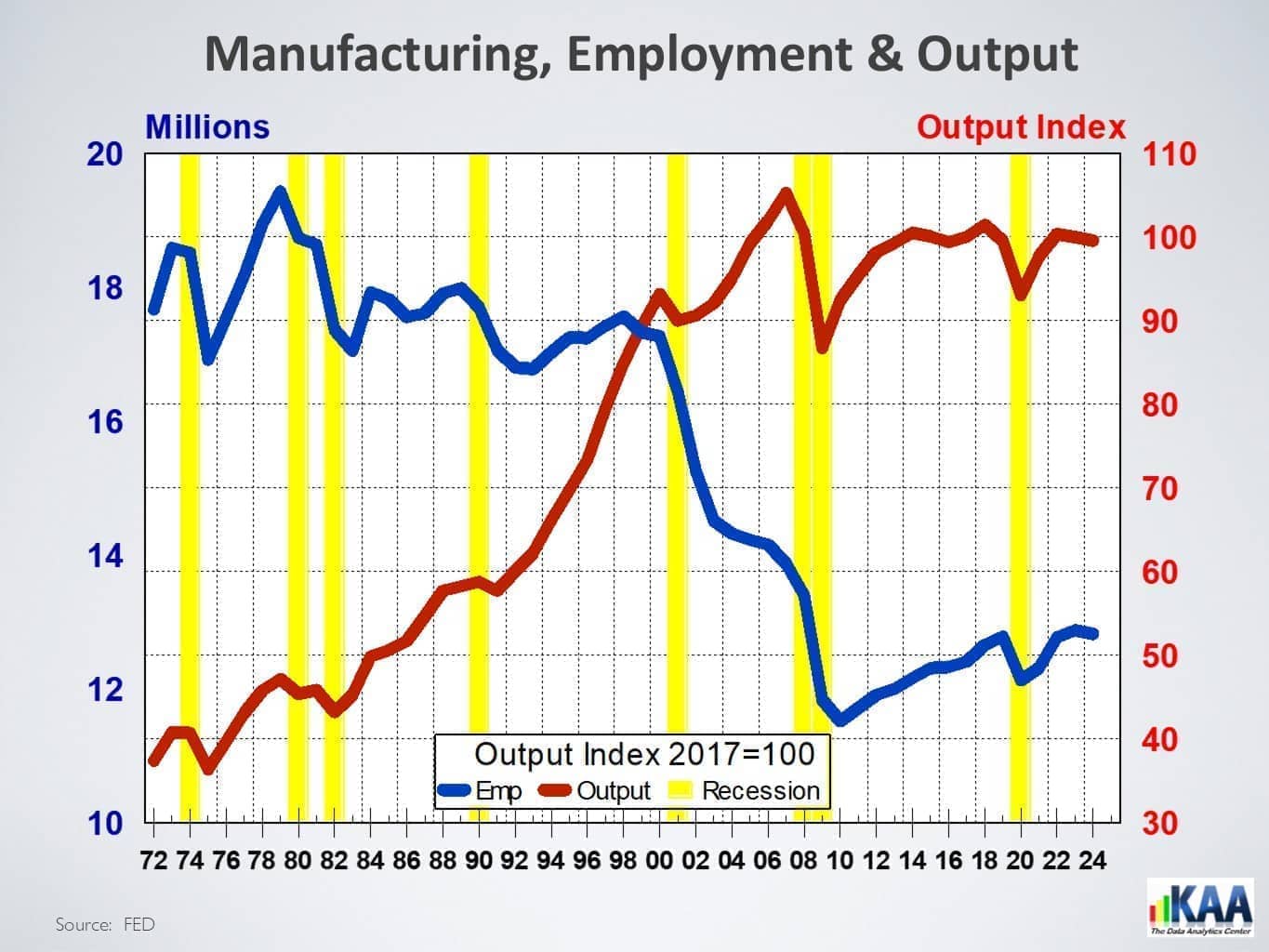
What happened to manufacturing? Are we producing anything anymore?
I am often asked if we still produce anything. Manufacturing, particularly in the Lehigh Valley, is a very sensitive subject. Manufacturing was the lifeline of the Valley in the 1970s; nearly half of all workers were employed by a manufacturing company. And they used to pay more than most other jobs. That is what people remember, but that has all changed in the Valley; now, manufacturing jobs account for a little more than one out of ten local jobs, and many other jobs pay better than manufacturing.
Read the issue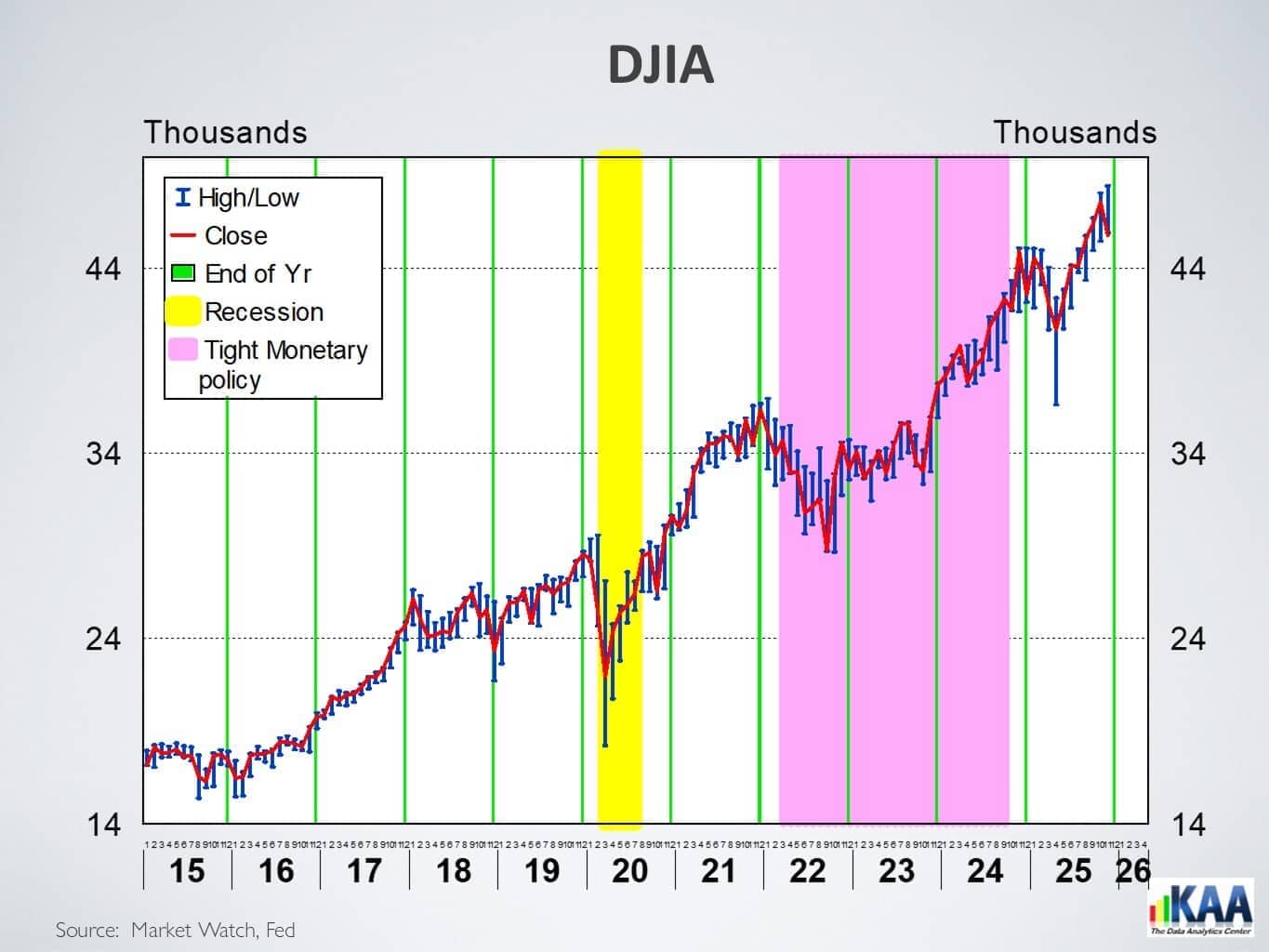
AI Frenzy Drives Dow, But Economy Lags Behind
In the absence of GDP updates, the best data point for assessing the economy's growth is personal consumption expenditures, which accounts for almost 70% of GDP and has a 93% correlation with it. Based on that, our model estimates 2.4% growth in GDP. The DJIA, as of the end of October and before the recent corrections, had increased by almost 11% after inflation adjustment, more than four times the economy's growth.
Read the issue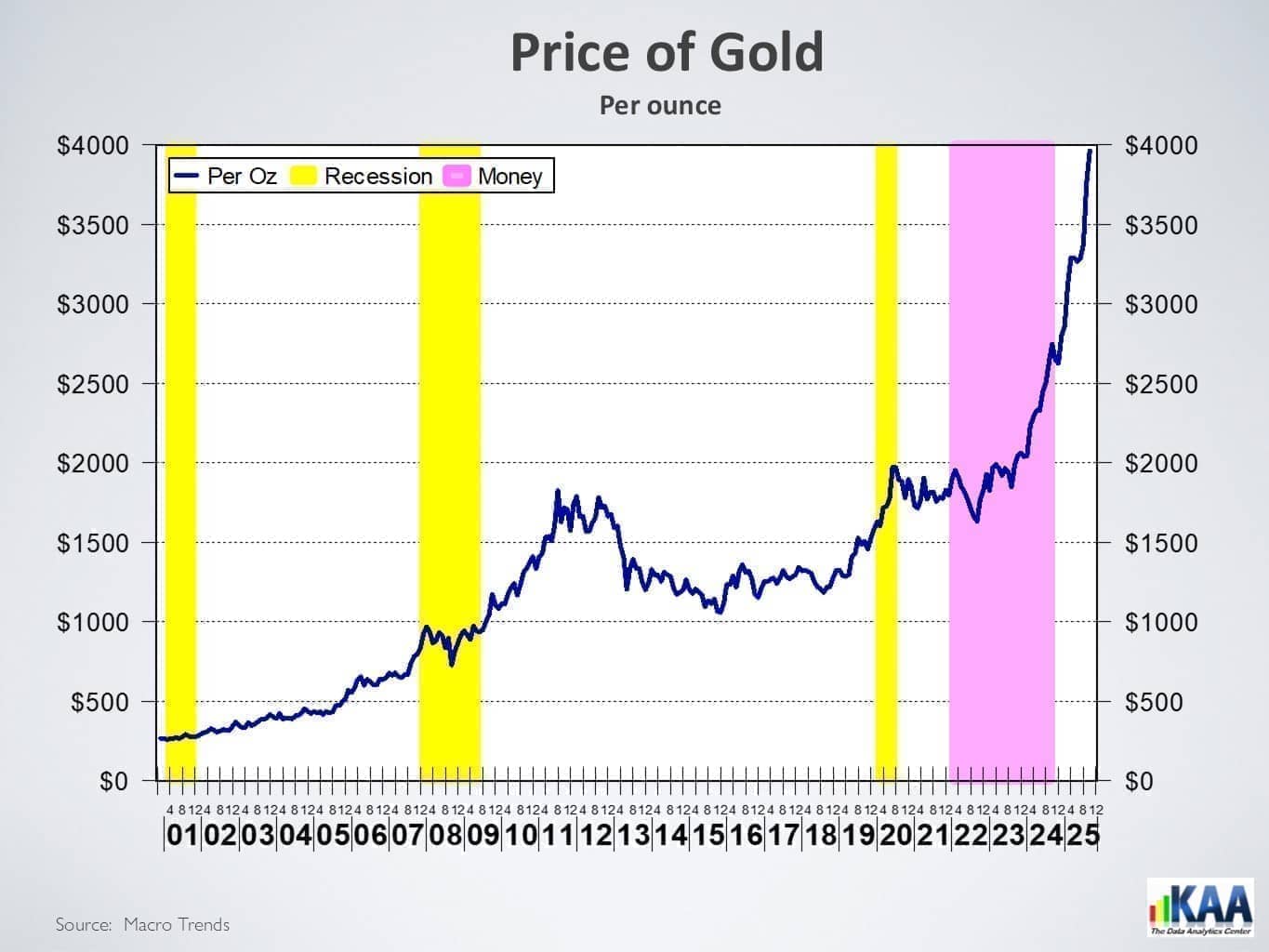
Gold Breaks $4,000: A Historic Surge
For the first time in history, the price of gold has surpassed $4,000 per ounce, as of this writing, marking a dramatic 51% increase since the beginning of the year. This milestone is more than a headline—it’s a signal of deep economic unease and a resurgence of gold’s role as a safe-haven asset.
Read the issue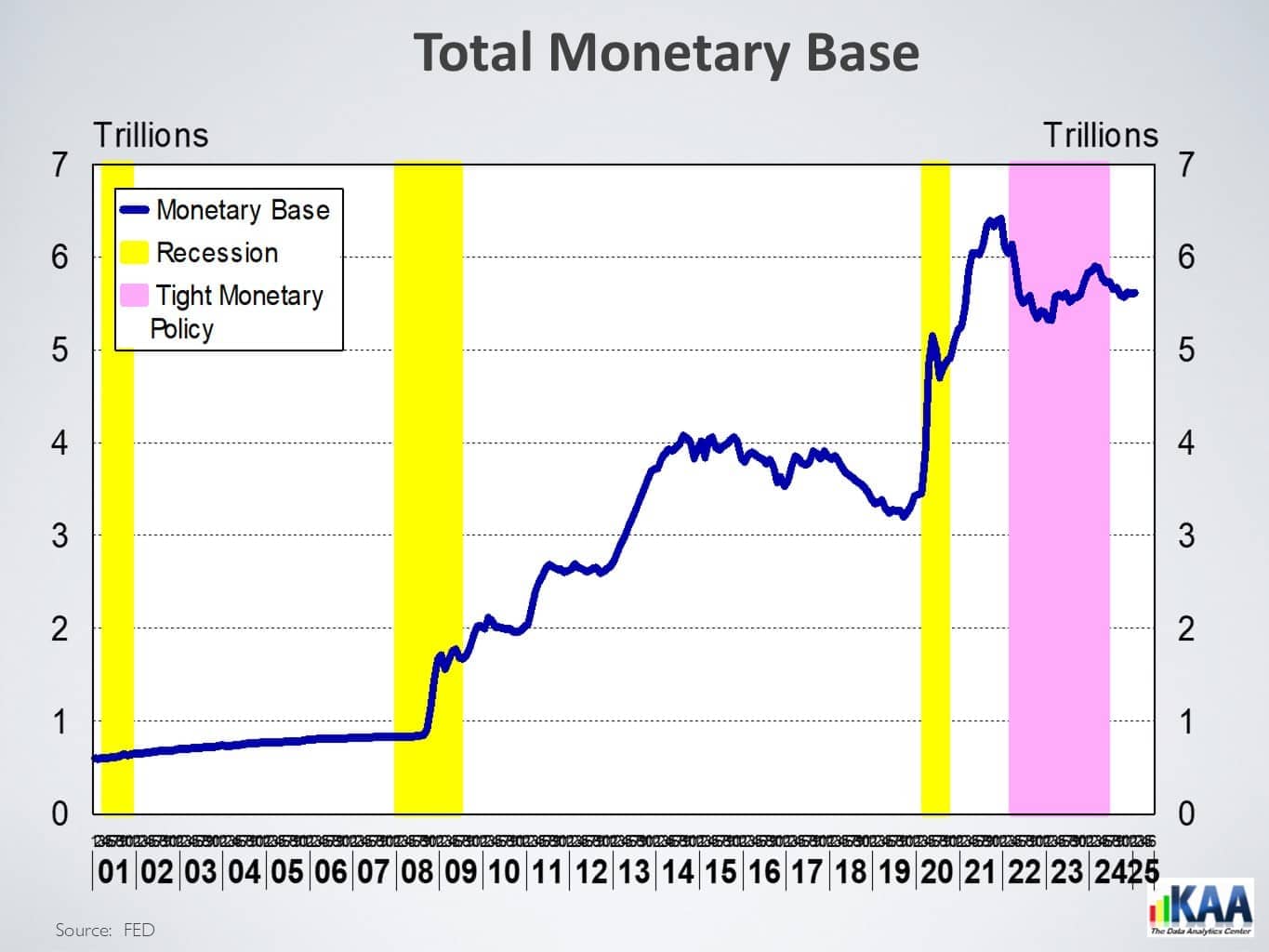
The FED Holds Steady on Interest Rates
After increasing rates 11 times from March 2022 to July 2023, the FED implemented three rate cuts between September and December of last year. In March, it held rates steady, announcing that “we now have inflation coming in from an exogenous source, but the underlying inflationary picture before that was basically 2.5% inflation, 2% growth and 4% unemployment.”
Read the issue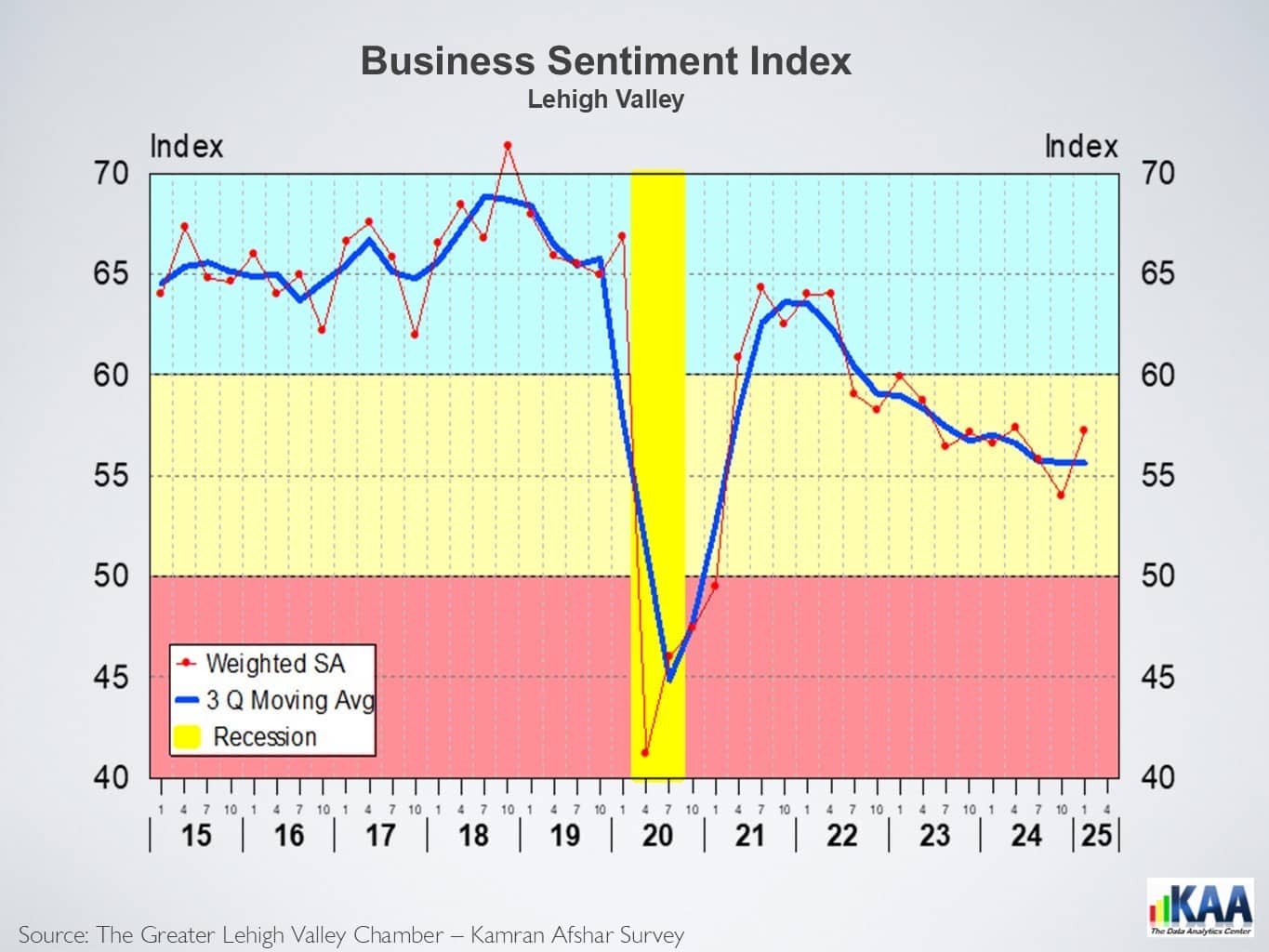
The Lehigh Valley business sentiment index rose by 6% in January
In January, the Valley's Business Sentiment Index (BSI) rose by 6%, the largest one-quarter increase since Covid recovery. The index runs from zero to 100. Above 50 means local business sentiment is positive; below 50, it is negative.The index took a major hit from the inflation surge in 2022, falling from 64 to 54 in two years. In January, however, the index rose to 57, the same as last January’s level.
Read the issue
Artificial Intelligence
AI became the news of the week after the arrival of DeepSeek, the Chinese AI that does not require advanced computer chips and thus does not require an entire power plant to operate!But what is AI? I used to tell my students this was a misnomer, as the program was not intelligent. It may have extreme amounts of information about a subject but is unaware of simple things that a child of 4 readily knows. Also, the word artificial is inaccurate since the program depends on the very real intelligence of its programmer. I asked ChatGPT about my definition; it mostly agreed with my description, although it said modern AI, particularly machine learning models, are not purely hand-coded. I think it used the word modern to make fun of my age and reliance on writing code! The program can learn from large amounts of data; however, this is not beyond its programming since the programmer directs the AI to gather and analyze new information.
Read the issue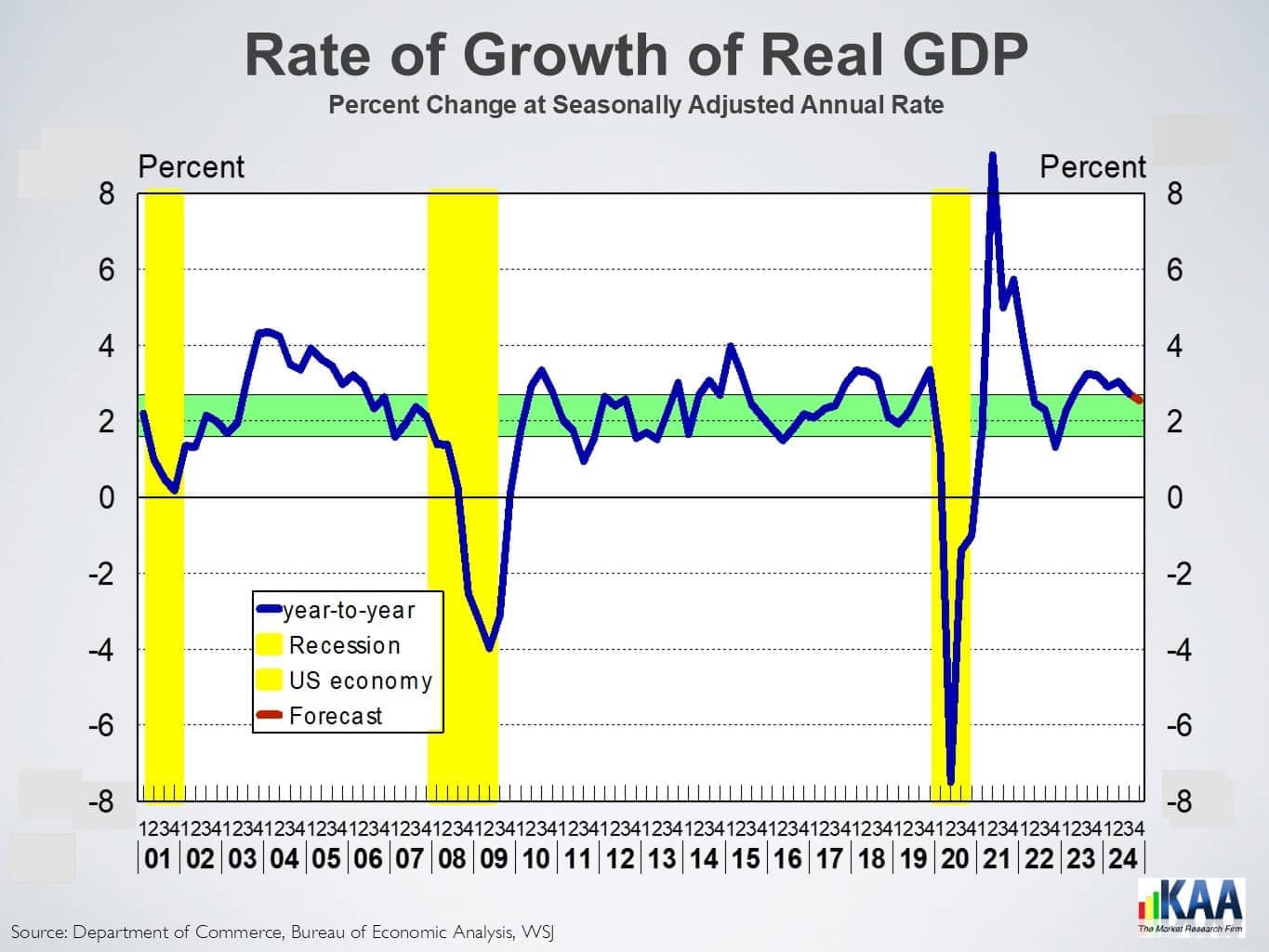
2024, Year in Review
The economy grew at an annual rate of 2.6% during the first three quarters of 2024. Based on current data, last year’s economic growth is expected to be around 2.7%, which is better than the average for this century. The average unemployment rate for 2024 was 4%, well below this century’s average. The Valley’s average unemployment rate during the first 11 months of last year was 3.7%, yet another lowest for the century. Technically speaking, the economy is in a good place.
Read the issue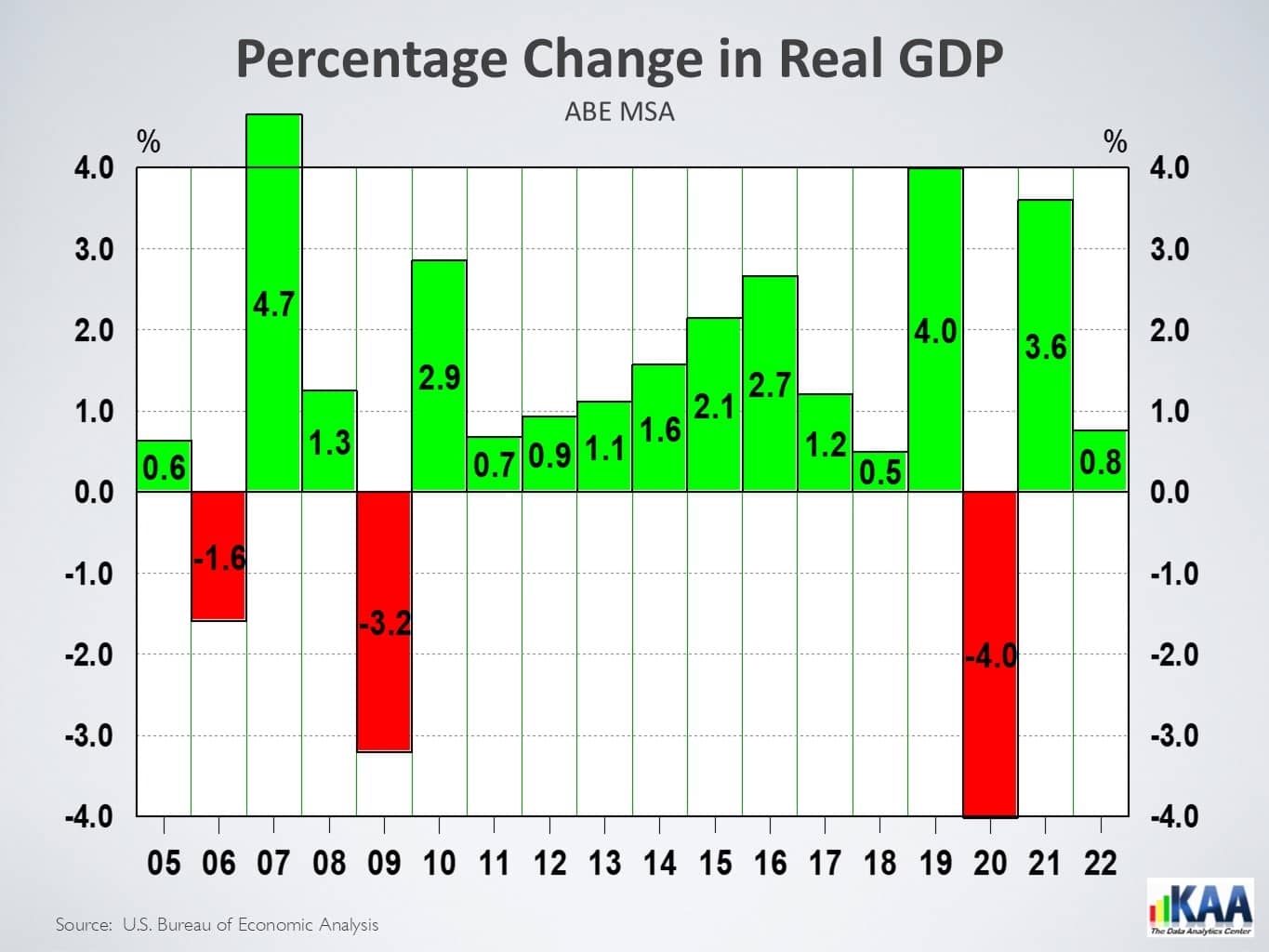
Lehigh Valley's economy grew by 0.8% in 2022
According to the Bureau of Economic Analysis, the Lehigh Valley's GDP for 2022 rose to $54.3 billion. After adjustment for inflation, the Valley’s economic growth in 2022 was 0.8%. We have borrowed the term Gross Domestic Product from a nationwide concept to apply it to regional economies. The term basically means the total output of goods and services produced by labor and capital located, in this case, in the Lehigh, Northampton, Carbon, and Warren counties.
Read the issue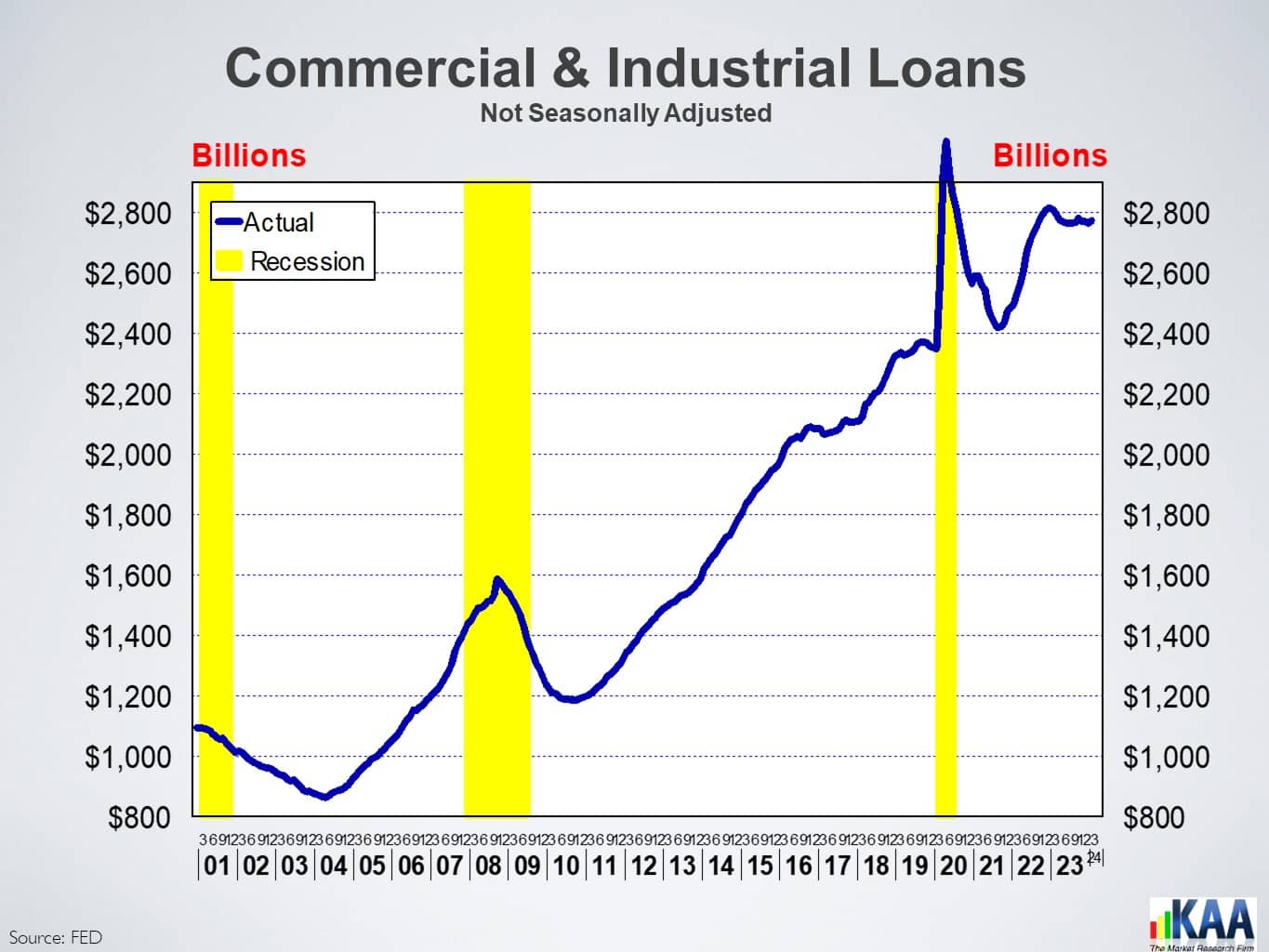
Business borrowing, how does it affect the economy?
Of all the indicators of the economy's future growth, the volume and change in the level of business borrowing stand out as significant barometers of future economic activity. Business borrowing is typically for expansion purposes. Banks do not easily grant loans solely to cover payroll expenses, especially not on a recurring basis. Banks lend money primarily to entities that do not urgently require the loans. To be fair, banks are also businesses themselves and must ensure a reasonable certainty of debt repayment.
Read the issue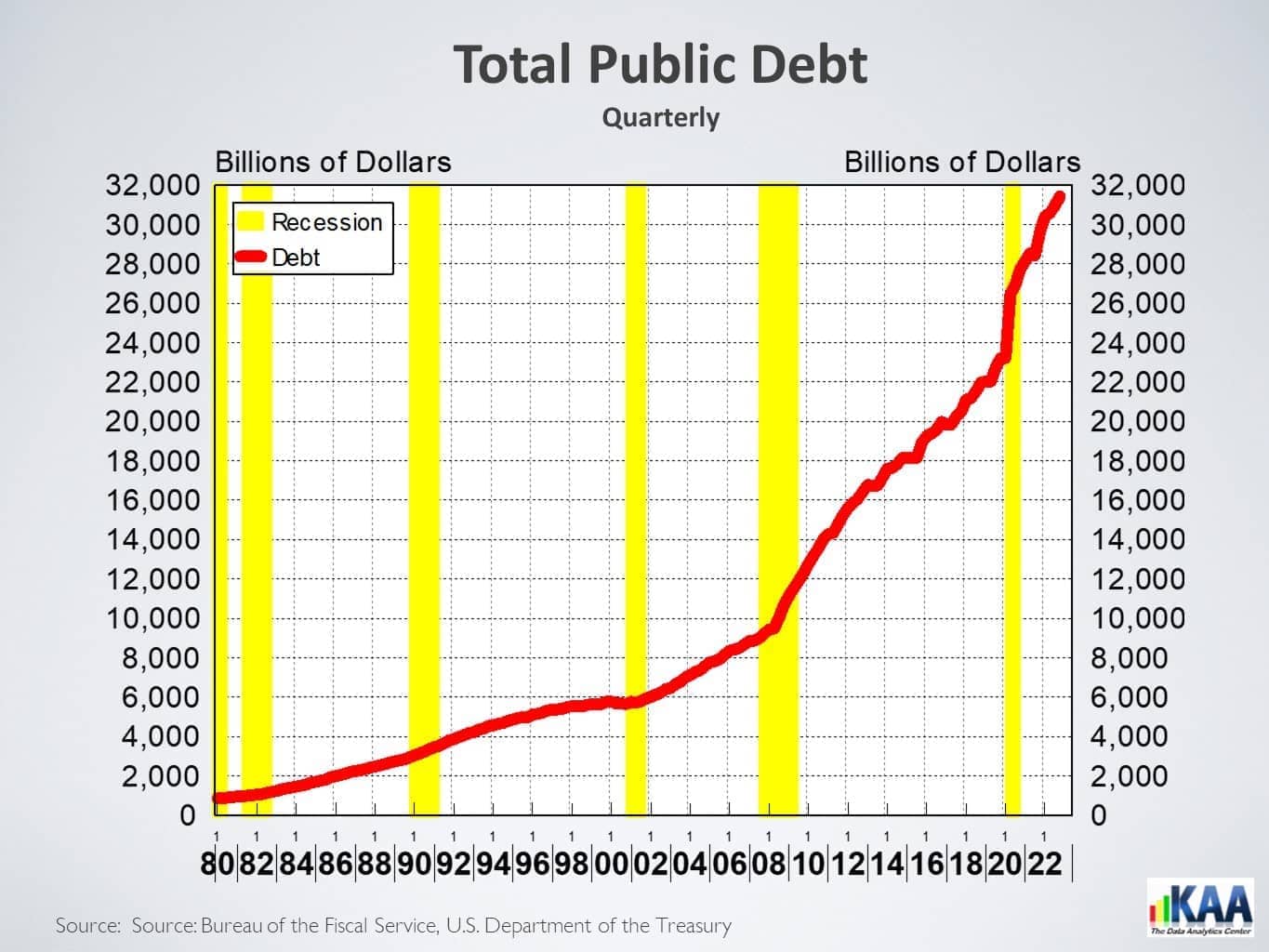
Our national debt is now larger than our GDP, is it possible to reduce the debt
The national debt is now at $31 trillion and will continue to rise. At this level, it is 119% of the country's Gross Domestic Product. Yes, the national debt is larger than the GDP, and it has been since 2015. However, as high as the debt is, it is not the first time that debt has exceeded the GDP; at WWII's end, the debt stood at 121% of the GDP. And much closer to the present, during the 2nd quarter of 2020, national debt rose to 135% of the GDP, even higher than after WWII. The interest payment on the WWII debt was less than 1.8% of the GDP, which is obviously due to the very low interest rates of the time.
Read the issue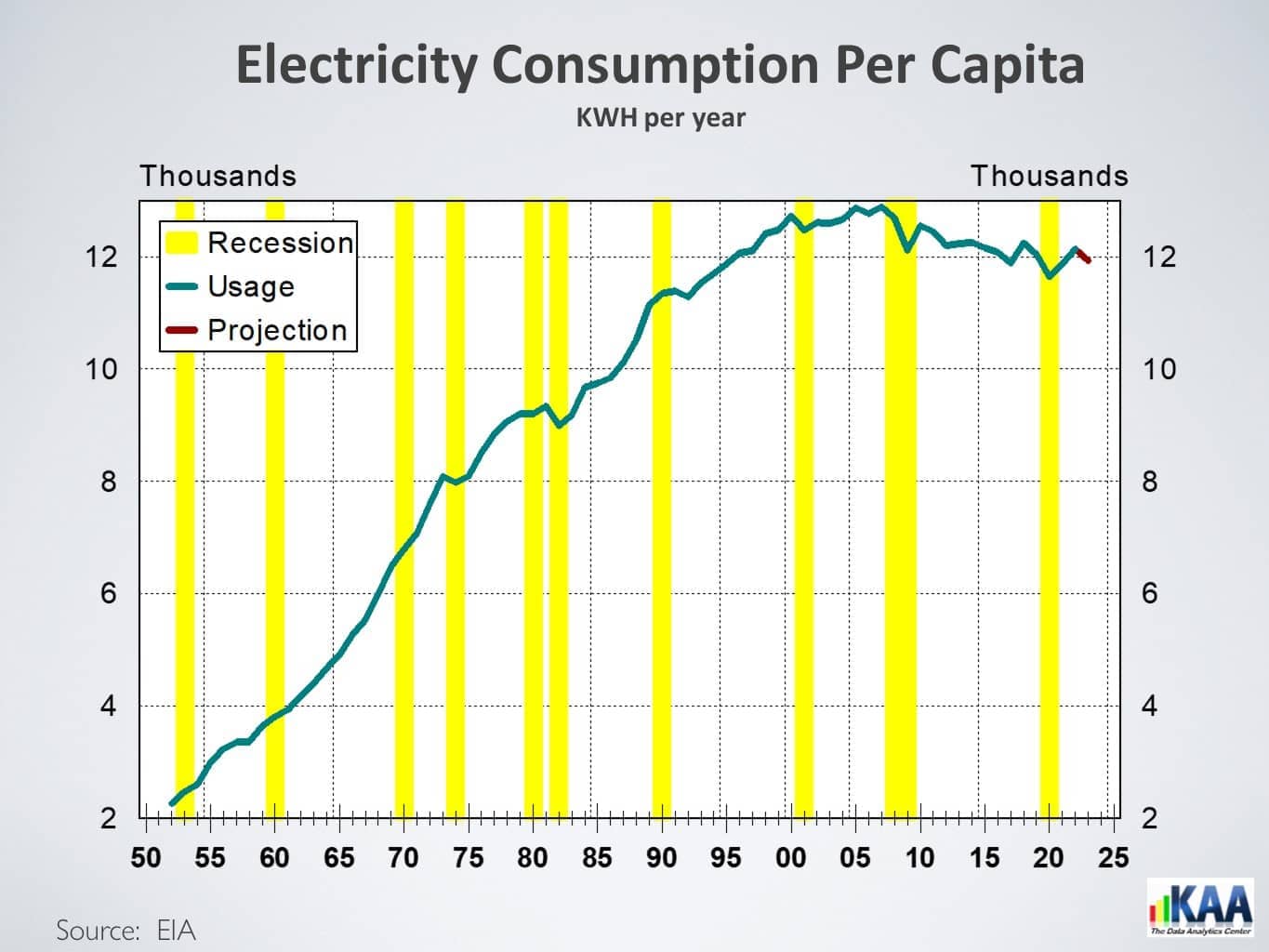
We are using less electricity
According to the US Energy Information Administration, we use less electricity per capita. While we have increased our electrical usage by 16% this century, US population increased by 20% during the same period. On a per capita basis we have reduced our electrical consumption by 3% since the beginning of this century.
Read the issueRead the Review as it publishes.
Each issue, with that week’s Economic Pulse segment from WDIY, delivered the morning it airs.
Never shared or sold. Unsubscribe in one click.